23e Festival international Signes de Nuit - Paris / 4-12, 2025
9
|
|

The Farc Guerrilla, a History of the Future
|
|
Pierre Carles |
France / 2024 / 02:24:00 |
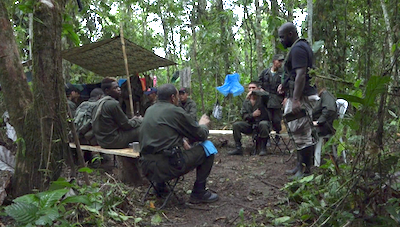
Under the auspices of Rio Chiquito, Bruno Muel and Jean-Pierre Sergent’s 1965 report on the birth of the FARC, and Dunav Kuzmanich’s 1981 fiction film Canaguaro about the end of the Liberal guerillas, this is look back on 70 years of clandestine life in the Columbian forest. Women and men who took up arms amid profound social inequality and political violence recount their years as fighters and their return to civilian life, without disowning their past. From 2012, when the peace negotiations began, to 2022 — the story of a new struggle.
|
|
 |
JURY DECLARATION :
"The jury commended the methodical rigor and immersive fieldwork that structure this multi-year documentary investigation. The camera, constantly in motion deep within the forest, adopts a "guerrilla" tempo to capture the urgency and intimacy of the individuals' journeys. This meticulous work, which intelligently combines historical archives with years of interviewing witnesses, lends the film its authenticity and human depth. It thus conveys, without judgment, the complexity of social aspirations and disillusionment, offering a profoundly accurate perspective on the history of the FARC." |
|
SIGNS AWARD
The Signs Award for Documentary honors films, which express in an original, convincing and sensitive way the perturbing aspects of reality.
|
|
|
Norma Nebot, Cristina Mora |
Spain / 2025 / 01:18:34 |
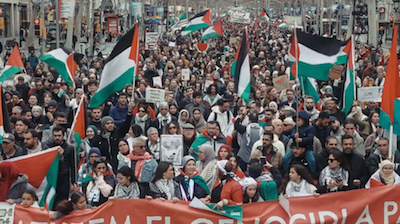
Being a human rights activist and an NGO staff member in Palestine is a high-risk endeavor. Even when the struggle is for women’s rights or the right to health. In 2021, Israel designated six of the largest Palestinian NGOs in the West Bank as terrorist groups—without presenting evidence. Some of their directors and staff have been detained or targeted with military-grade spyware such as Pegasus. Over the past two years, the Israel-Gaza war has dominated international headlines—but what was happening before October 7, 2023? Through newly uncovered archives, unseen personal footage, and images captured in the West Bank in 2023, this documentary sheds light on how the state of Israel set its sights on dismantling Palestine’s civil society. How are these Israeli policies sustained? “Shrinking Space” includes evidence of U.S. involvement, Europe’s complicity, illegal detentions, and the arbitrary imprisonment of innocent Palestinian children. The film weaves together intimate portraits of these renowned persecuted Palestinian activists with powerful reflections that provide key insights into the ongoing Israeli’s apartheid regime and systemic repression in Palestine.
|
|
|
JURY DECLARATION :
The jury emphasized the power of a narrative constructed with meticulous investigative rigor, weaving together recent archives, personal testimonies, and footage captured on location. The staging, constrained by the dangers of filming and limited spaces, lends a palpable tension and profound authenticity to each image. It visually conveys the oppression experienced by certain organizations and their defenders. By giving a human face and concrete evidence to this reality, the film achieves a courageous and essential cinematic feat.
|
|
DIRECTOR STATEMENT :
Long before 7 October, NGO workers and human rights activists striving to improve life for their communities—through peaceful means and in pursuit of justice—were already being persecuted and accused of terrorism.
Our film not only sheds light on the Israeli apartheid regime but also addresses the corruption within the Palestinian leadership. “Our space is shrinking not only because of the Israeli occupation forces. Unfortunately, the Palestinian National Authority (PNA) and the Hamas government in Gaza are also taking part in this attack against the Palestinian civil society,” explains Sahar Francis on camera, director of one of the illegalised Palestinian organisations, Addameer.
The filming process was as intense as you might imagine, and we are deeply grateful to all those who risked their safety to make it possible. One of our protagonists, Tahreer Jabeer—director of a women’s rights organisation—expressed to us that she was terrified of being arrested when we filmed her. Her ten-year-old daughter repeatedly begged her to quit her job and stay home. As part of this ongoing persecution, Tahreer was in fact arrested by Israeli occupation forces on 16 September 2024 under administrative detention, with no formal charges. She was released on 19 January 2025 as part of the ceasefire hostage and prisoner exchange between Israel and Hamas. She has been banned from returning to her work and is trying to recover from the trauma of her time in prison. We simply cannot imagine what she—and most Palestinians—have to endure.
As directors with a background in human rights, we admire these extraordinarily resilient Palestinian activists who continue to wake up every day and go to work, fighting for their rights under the most extreme conditions.
Thank you so much for amplifying their voices.
|
|
NIGHT AWARD
The Night Award for Documentary honors films, which represent reality in an ambivalent and enigmatic way, avoiding stereotypes of representation and simple conclusions.
|
|
|
Manuel Besedovsky |
Argentina / 2024 / 1:35:00 |
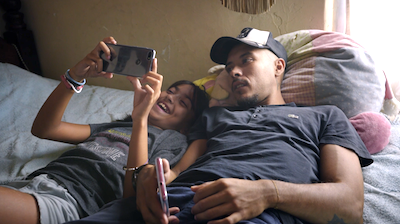
Luciano cuts a slight figure as he wanders through the narrow streets of the improvised Barrio Tablada on the edge of Rosario, taking care of his mother and sister and the makeshift home they share, finding occasional work on building sites as the search for a proper job continues, lifting weights at the gym. Manuel Besedovsky lays out the different episodes of this precarious, if not atypical existence with such deliberate deemphasis that it feels almost like a plot twist when Luciano meets with a consultant to talk about the various options for constructing a penis. And yet this part of Luciano’s experience has actually been there all along – another thread woven often imperceptibly into the fabric of the film with gentleness and care.
Handing CVs out, hormone injections, smoking joints with buddies from the neighbourhood, talking to his mother about the daughter that is no longer there, some slightly awkward rapping, thinking about having children – the most radical thing about this portrait is how each challenge, each diversion, each encounter is presented with the same sense of normality with which Luciano experiences it. Class, gender identity and their seldom-seen intersection shown as nothing more than getting on with life.
|
|
|
JURY DECLARATION :
The jury commends Manuel Besedovsky's sensitive and direct approach, which captures Luciano's life with remarkable discretion and intimacy. Tight framing and close-ups create an immediate sense of connection, allowing the viewer to share in the protagonist's precarious daily existence. This visual approach accurately and neutrally conveys his identity struggles, his fight for integration, and his quest for a dignified life. The film's strength lies in this direction, which, with great delicacy, presents the unique interplay between social context and gender. |
|
EDWARD SNOWDEN AWARD
The Edward Snowden Award honors films, which offer sensitive (mostly) unknown information, facts and phenomena of eminent importance, for which the festival wishes a wide proliferation in the future.
|
|
|
Hossein Martin Fazeli |
Canada / 2025 / 1:04:00 |
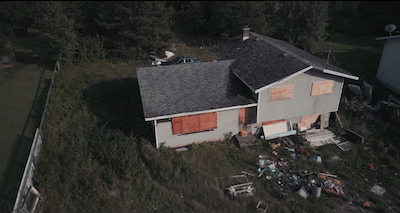
"I Am Gitxsan" follows Phoenix Apperloo, a recent high school graduate reconnecting with his Indigenous heritage in Hazelton, British Columbia, Canada. Inspired by encounters with residential school survivors, he writes a heartfelt letter to Prime Minister Trudeau about the injustices faced by his people. The documentary highlights the impact of colonialism on the Gitxsan community, featuring insights from experts like Dr Gabor Maté and showcasing their resilience through protests and legal actions. It culminates with a moving message of hope and determination, emphasizing the power of the Gitxsan people's enduring spirit, the beauties of their culture, and their commitment to future generations.
| |
|
JURY DECLARATION :
The jury praised the film's direction, which orchestrates an intimate and visual journey in service of a quest for identity and justice. The film alternates between wide shots, revealing the grandeur of ancestral landscapes, and close-ups of faces, capturing with rare intensity the strength and vulnerability of the testimonies. This visual construction, enriched by animation, embodies the reclaiming of a collective memory and a violated dignity. The film's execution thus elevates this documentary to an essential work, giving a powerful cinematic voice to the struggle against the historical injustice suffered by the Gitxsan people.
|
|
DIRECTOR STATEMENT :
This is an honor of immense magnitude! THANK YOU! Edward Snowden is a hero of mine, and to receive an award in his name is a profound privilege! |
|
At the Door of the house Who Will Come Knocking
|
|
Maja Novakovic |
Serbia / 2024 / 1:24:00 |
Set in the harsh yet beautiful landscape of Bosnia and Herzegovina, the film reveals inner, intangible realms through the patient observation of the natural world. It follows an elderly man living in isolation, weaving together a tapestry of dreamlike visuals as it records the routines of his daily life. Surrounding mountains, a burning stove and animal companions offer solace and warmth.
|
|

|
JURY DECLARATION :
The jury was captivated by Maja Novakoic's painterly mise-en-scène, which elevates the Bosnian landscape to a true protagonist through sweeping, pristine shots. The visual contrast between the vast, mineral expanse and the close-ups of the old man's meticulous gestures creates a poetic and contemplative tension. The interplay of natural light and the editing, paced by the music, sculpt an inner time, transforming solitude into plenitude and grief into serenity. This stylized and delicate approach makes the film a profound cinematic meditation on the essential, where the companionship of a horse becomes a form of universal warmth.
|
|
|
|
Bår Tyrmi |
Norway / 2024 / 01:34:00 |
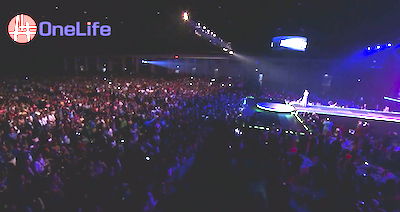
Fascinating and thrilling reconstruction of the rise and fall of the crypto currency company OneCoin. It all started in 2016 with OneCoin’s promise that it would become the world’s biggest crypto currency. Millions of people invested money, at least partly due to the charisma of the scheme’s leaders Sebastian Greenwood and Ruja Ignatova. They used notorious pyramid scheme tactics, holding gala style meetings to whip up enthusiasm among their members to draw their own networks into buying digital currency.
The protagonist of this story is Bjørn Bjercke. Soon after OneCoin approached him for his expertise he discovered all sorts of things were amiss. Bjercke decided to share this knowledge publicly, despite the life-threatening danger that would entail.
The film raises questions about human nature: Why do some people look away, while others go to the barricades? And how come our craving for more is so powerful that we let ourselves be fooled? Victims talk about their motivations, and influence experts confront us with our vulnerabilities: the fear of failure and a need for belonging.
|
|
|
JURY DECLARATION:
The jury was captivated by Bår Tyrmi's relentless investigative work, which orchestrates his narrative with the rigor of a police thriller. The camera, sometimes serving as an expert tool and sometimes as a hidden camera, captures the victims' testimonies with remarkable courage and dismantles the mechanisms of the scam. This immersion into the heart of the OneCoin system reveals, with keen insight, the universal drivers of manipulation: the thirst for wealth, the fear of failure, and the need for belonging.
|
|
MENTION FOR THE SIGNS AWARD
The Signs Award for Documentary honors films, which express in an original, convincing and sensitive way the perturbing aspects of reality.
|
|
|
Lawrence Abu Hamdan |
Lebanon / 2024 / 0:44:00 |
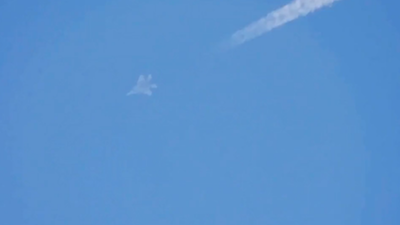
During the pandemic, artist Lawrence Abu Hamdan sets out to document Beirut's noise levels, which are increasing dramatically, particularly in the airspace. An essayistic investigation on the militarisation of the skies.
|
|
|
JURY DECLARATION :
By making the sky an oppressive soundscape, Diary of a Sky transforms a rigorous investigation into a sensitive and political experience. The jury applauds the power and originality of this writing.
|
|
MENTION FOR THE NIGHT AWARD
The Night Award for Documentary honors films, which represent reality in an ambivalent and enigmatic way, avoiding stereotypes of representation and simple conclusions.
|
|
|
Anastasia Trofimova |
Canada, France / 2024 / 2:09:00 |
Anastasia Trofimova, a Russian-Canadian filmmaker, gains unprecedented access to follow a Russian Army battalion in Ukraine. Without any official clearance or permits, she earns the trust of foot soldiers and embeds herself over the span of a year with one battalion as it makes its way across Eastern Ukraine. What she discovers is far from the propaganda and labels pushed by the East or the West: an army in disarray, soldiers disillusioned and often struggling to understand what they are fighting for.
|
|

|
JURY DECLARATION :
The jury recognizes the power of a film that places humanity at the heart of the narrative. Through a silent observational approach and close-ups, the film captures the vulnerability and confusion of individuals confronted with the realities of conflict. This intimate perspective focuses on the subjective experience of soldiers, inviting profound reflection on the human cost of war and the universality of the questions it raises. By focusing on the individual, the work transcends divisions and rises to become a necessary meditation on the fragility of the human condition in times of war.
|
|
MENTION FOR THE NIGHT AWARD
The Night Award for Documentary honors films, which represent reality in an ambivalent and enigmatic way, avoiding stereotypes of representation and simple conclusions.
|
|
|
Adelina Borets |
Poland / Ukraine / 2024/ 1:10:00 |
An humorous anarchist woman fights to protect her land from developers. Her struggle intensifies with the onset of war, but she continues to laugh, using humor as her last weapon to stay free. Set in the middle of the cement jungle of Kyiv – usually referred to as "sleeping quarters” – we dive into an unexpected oasis of flowers and nature. The locals refer to it as a mini-farm or simply a messy pit. That is where we find the main character of our film, the 67-year-old Natalia, who is the rebel of the neighborhood, the last one refusing to sell her land. She is full of life and infectious energy, always armed with a sense of humor – her strongest shield. Despite that the place resembles a shelter for homeless people, Natalia sees it as her paradise on earth. An oasis of peace, independence, and freedom. And no one – not even her own children, who are scattered around the world – can persuade her to move anywhere else.
For the last 50 years, Kyiv's developers were unable to get rid of Natalia and her ecosystem, thanks to the grateful people who live there with her – a pair of refugees from Luhansk, a former and current husband, and a granddaughter. When the worst day in Ukrainian history began, on February 24th, 2022, Natalia's fight for her tiny plot of land only gains momentum and quickly expands way beyond its borders. Unlike many others, she decides to stay and to do everything in her power to help liberate Kyiv. This time she embarks on a much larger fight for the homeland she loves. By nailing Putin to the walls, making Molotov cocktails and keeping up her good spirit by joking all the time – she heads for victory.
Natalia always fights with a smile and comes out on top. Kyiv developers stopped pressuring her during the military events. In some ways, Natalia found her own peace in the midst of the war. She realizes that she cannot live calmly. Everyone is changing as a result of the war. Natalia is no different. One the one hand, she engages in rebuilding the city, on the other she starts to think about death. One of her husbands died. Even her goat died. She will die here and no one can take it away from her. This is what she means by freedom.
|
|

|
JURY DECLARATION:
The jury was captivated by the film's mise-en-scène, which orchestrates a constant visual dialogue between Natalia and her surroundings, the only thing she has ever surrendered to. The film alternates between close-ups of her face, her garden, and her animals, and wide shots of the concrete jungle that embraces her, illustrating her resistance through the simple contrast of images. This framing choice underscores the confrontation between her preserved microcosm and external forces, whether urban development or war, transforming her garden into an act of cinematic resistance. By capturing this oasis of life and freedom, the camera celebrates with remarkable precision the quiet and incorruptible strength of its heroine.
|
|
|
|
|